
Problem: long waits, high bills, temperature swings.
Promise: instant hot water, correctly sized for Qatar/GCC inlet temperatures, flows, and electrical supply — with a stainless-steel heating chamber engineered for saline, hard water.
What is the eSmart?
AquaSmart eSmart ES-60 is an instant electric (tankless) water heater for GCC power systems — 220–240 V single-phase. It heats water only when you open the tap, so there’s no storage tank and almost no standby losses. Compact, wall-mounted, and point-of-use friendly, it’s ideal for apartments, villas, salons, cafés, clinics, and light-commercial zones.
Power range: 6, 8, 12, 18 kW (single-phase) and 27, 36 kW (three-phase aquaSmartR).
Typical inlets in Qatar/GCC: ~25–34 °C (coolest months can dip lower inland). Warm mains = higher usable flow.
Why choose AquaSmart?
- Built for GCC water & power: Works with 220–240 V (1~) and 380–415 V (3~).
- Stainless-steel heating chamber: Better resistance to salinity & hardness than copper-based designs.
- Stable temperatures: Electronic control keeps outlet steady within the rated flow window.
- Point-of-use comfort: Short runs, faster warm-up, less water wasted.
- Serviceable: Inlet strainer, straightforward descaling path for hard water.
Stainless Steel vs Copper Heating Chambers
Many imported “American-style” electric tankless units use copper heat exchangers. In high-salinity and hard Gulf water, copper is more prone to:
- Pitting & localized corrosion in chloride-rich water (especially at higher temperatures).
- Surface degradation accelerating leaks and temperature instability over time.
Our stainless-steel chamber (e.g., 304/316L-type construction) was selected for GCC conditions because it offers:
- Higher resistance to chloride-induced pitting at typical domestic hot-water temperatures.
- Longer service life and fewer leak risks in saline and mineralized water.
- Neutral water taste/appearance (no metallic tint).ity check: Any heater can scale in hard water; stainless simply resists corrosion better. You still need a strainer and periodic descaling for top performance.
How tankless sizing works
- ΔT (temperature rise) = Outlet setpoint − inlet temperature.
- For a given kW, more flow = lower ΔT; for a given ΔT, more kW = more flow.
- Size to your coolest-month inlet and real fixture flow (L/min).
Quick steps:
- List fixtures & actual flows (e.g., shower 6–8 L/min; kitchen 5–7 L/min; basin 3–5 L/min).
- Determine inlet (coolest month) and choose outlet setpoint (showers 40–43 °C; kitchens 50–55 °C).
- Compute ΔT and use the chart to pick the model that meets ΔT at your flow.
- If borderline, step up a model or fit efficient heads/aerators.
Selection Chart
L/min first, then gpm in parentheses.
(6 kW and 18 kW are proportionally scaled; others are reference values.)
| Power (kW) | 10 °C | 15 °C | 20 °C | 25 °C | 30 °C | 35 °C |
| 6 kW | 8.60 L/min (2.27 gpm) | 5.74 (1.52) | 4.30 (1.14) | 3.44 (0.91) | 2.86 (0.76) | 2.46 (0.65) |
| 8 kW | 11.47 L/min (3.03 gpm) | 7.65 (2.02) | 5.74 (1.52) | 4.59 (1.21) | 3.82 (1.01) | 3.28 (0.87) |
| 12 kW | 17.21 (4.55) | 11.47 (3.03) | 8.61 (2.27) | 6.88 (1.82) | 5.74 (1.52) | 4.92 (1.30) |
| 18 kW | 25.82 (6.82) | 17.21 (4.55) | 12.90 (3.41) | 10.33 (2.73) | 8.61 (2.27) | 7.38 (1.95) |
| 27 kW | 38.73 (10.23) | 25.82 (6.82) | 19.36 (5.11) | 15.49 (4.09) | 12.91 (3.41) | 11.07 (2.92) |
| 36 kW | 51.64 (13.64) | 34.42 (9.09) | 25.82 (6.82) | 20.65 (5.46) | 17.21 (4.55) | 14.75 (3.90) |
Typical fixture mapping (rule-of-thumb)
- 6–8 kW: basins/hand-wash, light kitchen duty (POU).
- 12 kW: stronger basin/kitchen, short higher-temp bursts.
- 18 kW: single bathroom (shower + basin) with efficient head and warm mains; high-flow sink.
- 27–36 kW (3~): two conservative points or light multi-point; small gyms/pantries (manage overlap).
Applications by model
POU sinks (6–12 kW): offices, cafés, salon bowls, clinics, residential kitchens.
- Single shower (18 kW): one bathroom in warm months; more headroom than 12 kW.
- Multi-point (27–36 kW, 3-phase): two showers (efficient heads) or a small service zone with moderate overlap.
Electrical requirements
- Supply: 220–240 V single-phase (6/8/12/18 kW) and 380–415 V three-phase (27/36 kW typical).
- Nominal currents at 230 V (1~) / at 400 V (3~, per phase):
6 kW ≈ 26 A, 8 kW ≈ 34.8 A, 12 kW ≈ 52.2 A, 18 kW ≈ 78.3 A,
27 kW ≈ 39 A/phase, 36 kW ≈ 52 A/phase.
- Indicative copper cable CSA (planner’s aid; final by licensed electrician):
6 kW → 4 mm², 8 kW → 6 mm², 12 kW → 10 mm², 18 kW → 16 mm²,
27 kW (3~) → 6 mm²/phase, 36 kW (3~) → 10 mm²/phase.
- Install checklist: dedicated MCB(s), RCD/ELCB, correct earthing, lockable isolator, voltage-drop ≤~3%, compliant bathroom zoning/IP.
Installation must be by a licensed electrician; follow local codes.
Water quality & scaling
- Use a sediment strainer and keep flows in the sweet spot.
- Plan descaling (e.g., periodic citric-acid flush where permitted).
- Consider anti-scale cartridges or polyphosphate dosing (where allowed).
- Baseline inlet/outlet temperatures at commissioning to track performance.
Tankless vs tank
- Energy: tankless heats only what you use (minimal standby losses).
- Space: compact, wall-mounted; easy to fit under/near fixtures.
- Recovery: effectively continuous within rated capacity; tanks cool as they empty.
- Maintenance: no anode rods; just strainer cleaning + occasional descaling.
Common mistakes
- Ignoring ΔT and real flow. Always size to your coolest-month inlet and actual L/min.
- Undersized wiring/breakers or long runs (voltage drop). Confirm panel capacity early.
- Mixing cold at the tap near the activation threshold → temperature hunting.
- Assuming summer inlet when sizing for winter. Design to the lowest inlet.
Mini case study
- Before: roof tank, ~45–60 s wait, temperature dips, high bill.
- After: 18 kW eSmart mounted near the bathroom. With ΔT ≈ 18–20 °C at ~6.5 L/min shower (efficient head), hot water arrives fast; measured monthly kWh down ~15–20% (no standby loss). Users report steadier temperature.
Got it. I’ll expand your FAQs into a clear, technically solid set that works for both non-engineers and engineers in the GCC—no assumptions about expertise, just plain explanations, numbers, and simple formulas. Where exact values depend on site and code, I’ve marked them as installer to confirm.
FAQs
1) Will it work with low pressure?
Yes—if the flow stays above the activation point (~1–2 L/min) and strainers are clean.
Why it matters: Electric tankless units only heat when a minimum flow passes the sensor.
Specs & tips:
- Typical eSmart activation: ≈1.1 L/min (0.3 gpm) band; design for ≥1.5 L/min at the smallest outlet so you have margin.
- Fit a full-bore isolation valve and keep the inlet strainer clean.
- If pressure fluctuates, use a PRV (pressure reducing valve) or pressure-balancing/mixing valve.
2) How do I size it correctly with ΔT?
Size by ΔT = outlet setpoint − inlet temperature at your real flow.
Example (Qatar): Inlet 25 °C, shower setpoint 42 °C → ΔT = 17 °C.
Check the chart: at ΔT ~15–20 °C, a 18 kW can run a ~6–8 L/min shower with an efficient head; 27 kW gives more headroom or a second point.
3) Two showers on one unit?
Usually 27–36 kW (3-phase) with efficient shower heads and managed overlap.
Engineer note: Sum the total flow of concurrent outlets, pick your worst-case ΔT (coolest month), then select the row in the ΔT vs Flow table that meets it.
4) Why stainless-steel heating chamber (vs copper)?
Stainless resists chloride/salinity and many hard-water conditions better than copper at domestic hot-water temps.
GCC reality: Saline + hardness → pits copper faster; stainless reduces leak risk and keeps performance steadier. You still need descaling for mineral scale.
5) Can I preheat with solar or a buffer tank?
Yes—if the preheated water stays within the unit’s inlet spec and you add a thermostatic mixing (anti-scald) valve.
Tip: Solar/buffer raises the inlet temp → lowers ΔT → allows more flow or lower kW.
6) 208 V vs 230–240 V supply—what changes?
At 208 V, expect ~10–15% derating vs 240 V (less ΔT at the same flow).
Rule of thumb: Delivered kW ∝ V²/R; practical takeaway—measure on-load voltage and size with margin.
7) What breaker sizes and cable cross-sections should I plan for?
Use these indicative values for early planning; final sizes by licensed electrician to local code.
Single-phase 230 V (indicative):
- 6 kW ≈ 26 A → 4 mm² Cu, MCB typically 32 A (installer to confirm)
- 8 kW ≈ 34.8 A → 6 mm² Cu, MCB ~40 A
- 12 kW ≈ 52.2 A → 10 mm² Cu, MCB ~63 A
- 18 kW ≈ 78.3 A → 16 mm² Cu, MCB ~80–100 A (panel headroom required)
Three-phase 400 V (per phase, indicative):
- 27 kW ≈ 39 A/phase → 6 mm² Cu/phase, MCB ~40–50 A/phase
- 36 kW ≈ 52 A/phase → 10 mm² Cu/phase, MCB ~50–63 A/phase
Always consider: installation method, ambient, grouping, insulation type, voltage drop (target ≤~3%), and run length.
8) How do I check voltage drop quickly?
Rule of thumb (single-phase):
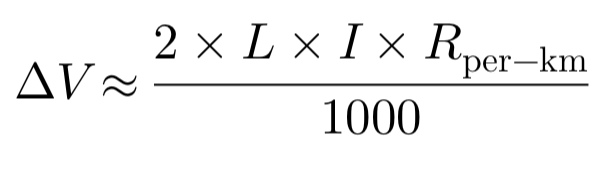
- L = one-way run length (m), I = current (A), R = cable Ω/km (from datasheet).
Keep ΔV/V ≤ ~3%. If ΔV too high, upsize cable or reduce run length.
9) What are typical flow rates at fixtures?
- Shower: 6–10 L/min (use efficient 6–8 L/min heads for better stability)
- Basin tap: 3–5 L/min
- Kitchen tap: 5–7 L/min
Use these to estimate total concurrent flow and pick the model from the chart.
10) Can I use a recirculation pump?
Short answer: Only if the recirc is on-demand or thermostatically controlled.
Why: Continuous loops can make an on-demand heater short-cycle. Ensure the recirc flow stays above activation but not excessive.
11) Do I need a thermostatic mixing (anti-scald) valve?
Yes—recommended, especially at showers, salons, clinics. It stabilizes temperature when pressure or flow varies and adds a safety layer.
12) What maintenance is required in hard/saline GCC water?
- Keep the inlet strainer clean (monthly/quarterly checks depending on water quality).
- Plan periodic descaling (e.g., citric-acid flush where permitted).
- Consider anti-scale cartridges or polyphosphate dosing (where allowed).
- Log inlet/outlet temps at commissioning to set a performance baseline.
13) Will it work outdoors?
Use indoor/protected spaces unless an outdoor-rated model is specified. Respect IP zones in bathrooms; avoid direct spray unless permitted by the rating.
14) Is venting required?
No flue venting (it’s electric). Still maintain clearances, ensure cooling air can circulate, and follow the manual for mounting orientation (vertical, upright).
15) What about noise and startup time?
Noise: Minimal (relay click + water noise).
Startup time: Essentially instant once flow exceeds activation; real-world “hot-to-hand” delay is mainly pipe travel time—place the unit close to the fixture.
16) Can one unit run a whole villa?
Possible with 27–36 kW + efficient fixtures and managed overlap, but many GCC clients prefer zoned/point-of-use for faster delivery and less water waste.
17) How much energy will I use (kWh)?
Two ways to estimate:
- Power × time: A 12 kW unit running 10 min uses 12 kW × (10/60 h) = 2 kWh.
- Thermal load:

This gives the minimum thermal energy; real draw ≈ thermal load / efficiency (electric elements are near-unity).
18) Single-phase vs Three-phase—how do I choose?
- Single-phase (6/8/12/18 kW): point-of-use and single bathroom (warm mains). Check panel capacity.
- Three-phase (27/36 kW): multi-point or two showers; typical for GCC buildings with 3-phase service.
Note: 27 kW & 36 kW are typically 3-phase 380–415 V in the GCC.
19) Common installation mistakes (to avoid)
- Sizing by kW nameplate instead of ΔT + L/min.
- Undersized cable/MCB or ignoring voltage drop on long runs.
- Mounting too far from outlets (long hot water delay).
- Skipping RCD/ELCB protection or proper earthing.
- No mixing valve, then mixing with cold at the tap → temperature hunting.
20) What do authorities/codes require?
Follow your local utility/civil-defence/electrical authority (e.g., KAHRAMAA in Qatar, DEWA/ADDC in UAE, SEC in KSA, EWA in Bahrain, MUSCAT ELECTRICITY in Oman, MEW in Kuwait). Licensed electrician must sign off on protection devices, cable CSA, earthing, and bathroom IP zones.
Need a quick recommendation?
Send us: city, inlet (coolest-month) temp, target outlet, fixture list with L/min, voltage/phase/available amps.
WhatsApp : +974 6008 8049
Email : safewaterheater@gmail.com
Website : www.aquasmart.qa
Key takeaways
- ΔT + L/min drive sizing — not kW alone.
- Stainless-steel chamber = better corrosion resistance in GCC salinity than copper designs.
- Single-phase (6/8/12/18 kW) for POU to single-bath; three-phase (27/36 kW) for multi-point.
- Plan for filtration + descaling; install by a licensed electrician.

